
HSE Trends · October 2026
Beyond the full-time hire: closing the modern HSE gap
Demand for senior HSE specialists is rising. For SMEs, the answer is not always another permanent post: flexible ergonomics, on-site OHT support and practical tools can close the gaps without corporate overhead.
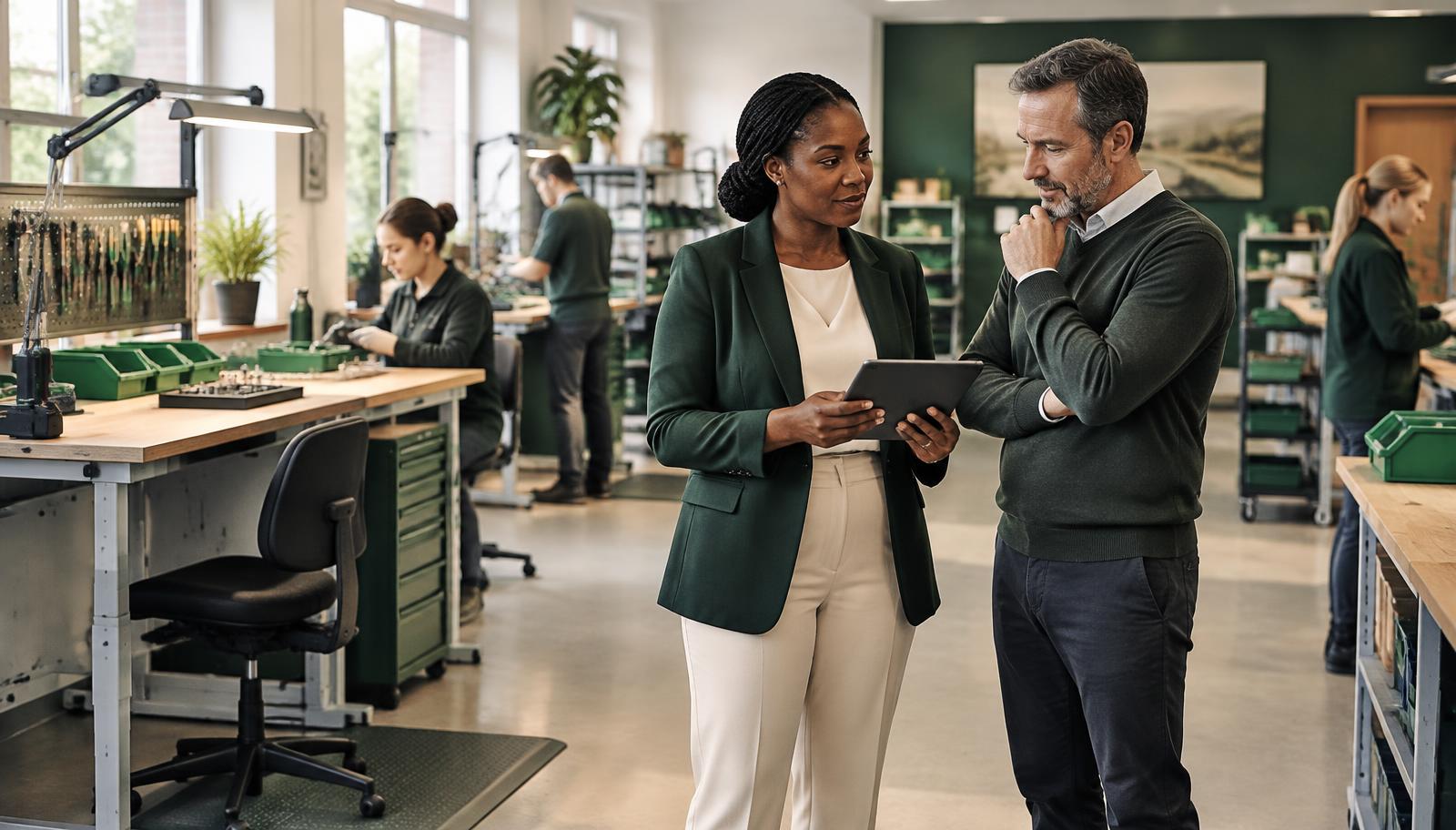
Senior HSE specialists are in demand. That tells us something useful: organisations are facing more complicated questions around regulation, hybrid work, infrastructure and ESG responsibilities — and they want people with deeper expertise to answer them.
For a large organisation, a permanent specialist hire may be exactly right. For many SMEs, it may be more expertise than they need every day and less flexibility than they need during a busy project, surveillance cycle or workplace change.
The sensible alternative is not to do without expertise. It is to bring in the right expertise at the right moment. Flexible ergonomics, non-clinical Occupational Health Technician support and well-designed self-service tools can strengthen an existing HSE or HR function without quietly building another department around it.
1. Scale on-site support when the workload rises
Workplace reorganisations, seasonal peaks, contractor onboarding and annual surveillance programmes do not arrive in neat, evenly spaced parcels. A permanent team sized for the busiest month can become an expensive answer to a temporary question.
A non-clinical OHT service can provide screening-level support on site when it is needed, with traffic-light reporting and clear onward referral triggers where clinical interpretation is required.
- Targeted health surveillance, including screening-level audiometry, spirometry, HAVS questionnaires and skin checks.
- Proportionate screening for noise, respiratory hazards, vibration and musculoskeletal discomfort.
- Predictable project costs for office, logistics and light-manufacturing teams without adding permanent headcount.
2. Bring ergonomic expertise into workplaces that keep changing
Hybrid work has made the workplace bigger, not smaller. It now includes the office, the spare room, the kitchen table, the shared hub and sometimes the passenger seat between appointments. A once-a-year tick-box exercise cannot see all of that clearly.
On-demand ergonomic support lets organisations focus attention where it will genuinely help: a person working in discomfort, a complex workstation, a move to hot-desking, or a team learning a new task. The aim is not to sell everyone a new chair. It is to look properly at the work and make the smallest useful change.
3. Let practical tools handle the everyday checks
Not every question needs a consultant in the room. Managers and employees can deal with straightforward risks confidently when the guidance is short, specific and written in ordinary English.
A one-page DSE checklist can reveal awkward screen height, reach and glare in ten minutes. A two-minute self-check can show whether a setup looks green, amber or red and whether a closer professional look would be sensible. Good tools do not replace expertise; they stop expertise being wasted on problems a clear prompt could solve.
4. Give stretched HSE and HR leaders some breathing room
HSE and HR leaders are often carrying broader portfolios while their diaries become increasingly fragmented. They may be managing supply-chain assurance before lunch, a workplace adjustment after it, and an audit request just as the kettle goes on.
Flexible specialist support acts as a quiet force multiplier. It takes technical screening, ergonomic review and practical documentation off the crowded corner of the desk, leaving internal leaders free to focus on strategy, culture and follow-through.
Right-sized does not mean second-best
The rise in senior HSE hiring shows that specialist knowledge matters. It does not mean every organisation needs every speciality on payroll. The stronger model is the one that matches the support to the risk: permanent leadership where it is needed, flexible expertise where it adds value, and simple tools for the everyday moments in between.
Workplaces should fit people, not the other way around. Sometimes that starts with an on-site clinic. Sometimes it is an ergonomic review. Sometimes it is one useful checklist that catches a problem before it becomes a sore neck, an awkward conversation or a line on the absence report. Comfort is the quietest kind of care — and it scales rather well.
Ready to protect your team without the corporate overhead?
Tell us where the pressure points are. Dee will listen first and help you choose the smallest level of support that genuinely fits.
Book a free 15-minute discovery call